

Virse groups five film-grade browser tools spanning realistic grain, black-and-white contrast, color tinting, AI LUT looks, and multi-shot palette transfer on a single collaborative canvas.
United States, 27th Nov 2026 – Virse has united five photographic tone and color grading tools inside its Creative Canvas, connecting a tactile silver-halide grain filter published November 25 with four grayscale, color-wash, cinema look, and reference-matching tools launched November 19. Built for retouchers, indie filmmakers, and e-commerce art directors, the five-tool cluster runs across Virse’s 40+ hosted AI models so teams inspect tonal contrast, film texture, and scene palette consistency directly inside a standard web browser.
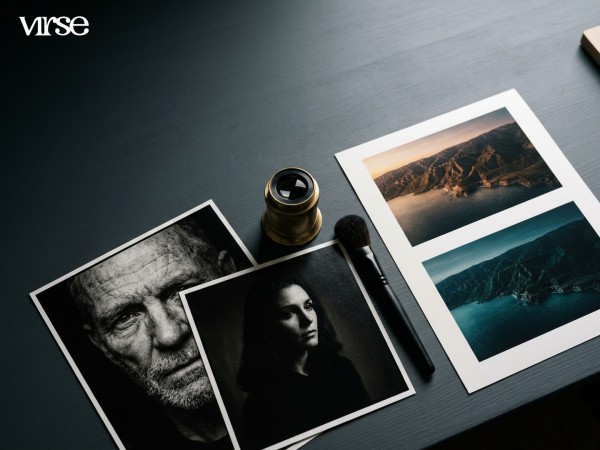
Color finishing regularly breaks down between quick online filters and heavy desktop suites. Most browser utilities simply strip RGB channels evenly into flat mid-gray or slap tinted rectangles across a frame, flattening skin tones and ruining specular glass reflections. Full color grading workstations produce rich film density, yet teaching every social producer or small brand founder to build node trees just to test teal-and-amber shadow warmth wastes production afternoons. Teams end up passing screenshots back and forth over chat without seeing three candidate grades aligned cleanly next to the untouched photograph.
Virse turns finishing into short descriptive prompts tied directly to side-by-side canvas proofs. Every adjustment renders onto a clean candidate plate. The source frame sits nearby for instant inspection, letting art directors spot skin shifts or soft edges right away.
Crafting silver halide grain, monochrome tone, and color washes
Photographers working with overly clinical digital captures start with the grainy filter to add organic silver-salt speckle across midtones and deep shadows. Instead of scattering uniform artificial noise specks over flat painted walls, operators describe fine high-speed film texture, gritty darkroom grain, or balanced daylight atmosphere. Multiple passes sit on screen together so editors cut excess softness early. Because grain synthesis spreads visually across the whole frame without pixel-radius controls or local mask brushes, teams dial back grain weight whenever fine knitwear seams or tiny bottle ingredients must read clearly.
Portraits, street candids, and architectural studies shift next into the black and white photo editor when rich luminance separation counts. Users request steep noir shadows, classic silver paper contrast, or gentle low-key grayscales in plain English instead of flattening every petal and leaf to dull mid-gray. That semantic control separates bright garden greenery from shadowed stone facades while leaving skin highlights soft and credible. Virse frames the tool as a fast tonal workstation for creative reviews, stopping short of raw RGB channel mixing sliders, sixteen-bit raw curves, or physical wet-darkroom printing.
Campaign headers, event banners, and dual-tone hero spreads wrap up the tonal pass inside the image tinter. Attaching any photograph beside a warm amber wash or cool deep-blue wash instruction applies smooth chromatic tinting without choking black point depth into muddy gray. Marketers inspect bold and quiet washes side by side before placing page headings on top. Contrast ratios remain a manual check inside web builders once tinted plates export.
“Colorists rarely need a hardware dial desk simply to see if silver grain, warm sepia shadows, or a teal cinema grade fits an upcoming launch set,” said a spokesperson for Virse. “Connecting all five grading tools on one shared canvas speeds visual look decisions while keeping file export boundaries clear.”
Previewing cinema LUT moods and transferring palette temperature
Film directors, product shooters, and campaign stylists testing look directions before final edit lock open the AI LUT generator with representative hero frames. Writing an aesthetic direction such as Scandinavian cold steel, muted amber archive tones, or warm theater tungsten, or dropping in one cinema reference still, previews that color grade across an uploaded photo right away. Product marketers run cool twilight and clean daylight grades side by side inside the canvas grid to align campaign imagery before full video editing begins. Virse sets an explicit technical limit for post-production engineers: outputs ship as static raster PNG or JPG images strictly for visual look exploration, and the platform generates zero .cube or .3dl lookup tables for direct import into desktop editing suites.
When a multi-angle campaign story needs consistent ambient warmth across mismatched camera sessions, retouchers pair two shots inside the color transfer node. A target photograph adopts the shadow density and light temperature of a chosen reference still while holding explicit written guards around human skin hues and packaging typography. Carrying late-afternoon gold or soft overcast skylight across ten product stills takes minutes rather than rebuilding individual exposure curves frame by frame. Because generative transfer focuses on editorial harmony rather than calibrated print colorimetry, teams inspect portrait faces and brand colors closely by eye prior to public release.
All five color and monochrome utilities integrate tightly with Virse Composer, Aesthetic Memory, and organized team Asset Folders so multiple grading rounds remain traceable per campaign. Virse opens all 21 image engines at 1K resolution on its Free tier, issuing 200 starter credits upon registration and refilling 50 units daily whenever remaining balances drop below 200. Paid memberships move through Basic at 1,000 monthly compute credits, Pro at 3,000 units plus unlimited runs on selected fast 1K image models, tiered Max levels reaching 4K still resolution and hosted video engines, and Business workspaces supporting up to 50 seats where subscription and top-up compute stays active without expiry.
About Virse
Virse develops a collaborative node-based visual AI workspace created by computer vision researchers and industrial design veterans holding more than 100 international design awards across hardware, packaging, and digital interfaces. Operating out of Dover, Delaware, the platform unites 40+ AI image, video, and text engines alongside Virse Composer, Aesthetic Memory, and structured team Asset Folders. Creative agencies, colorists, and online merchants rely on Virse to inspect tonal directions and unify campaign visuals on one canvas before final mastering.
Media Contact
Organization: Virse
Contact Person: Virse Media Relations
Website: https://www.virse.ai/
Email: Send Email
Country: United States
Release id: 51164
View source version on King Newswire:
Virse Groups Film Grain Monochrome Tinting LUT Preview and Color Transfer Tools
This content is provided by a third-party source. King Newswire makes no warranties or representations in connection with it.